


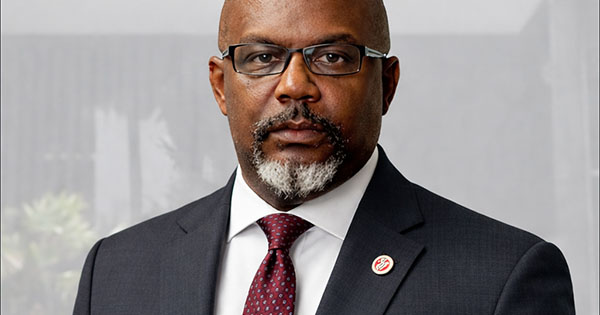
The following is an editorial by Attorney Zulu Ali on how America’s focus on controversial verdicts misses a deeper problem: who gets the opportunity to serve on the juries that decide them
Nationwide — As public debate continues over the conviction of Karmelo Anthony, the not-guilty verdict in the Chow case, and countless other controversial outcomes in courtrooms across America, the nation continues to focus on the wrong question.
The question is not merely whether a verdict was right or wrong. The question is who was in the jury room when that verdict was reached.
For more than a decade, I have argued that jury reform—not simply police reform, sentencing reform, or prison reform—must become a central priority of the civil rights movement. Until African Americans achieve meaningful participation in the jury system, we will continue to witness outcomes that leave Black communities questioning whether justice was truly served.
I write from a unique perspective. I have served as a United States Marine, worked as a police officer, and spent years as a trial attorney representing individuals accused of crimes, immigrants facing deportation, and those seeking civil justice in state, federal, and international courts. My experiences on both sides of the justice system have led me to one unavoidable conclusion:
The jury box remains one of the most important and overlooked battlegrounds for racial justice in America. Every time a controversial verdict is announced, protests emerge, political leaders issue statements, and commentators debate the evidence. Yet few ask the most important question: Where were the Black jurors?
The legal system often points to Batson and Wheeler challenges, as well as newer legislation such as the California Racial Justice Act, as safeguards against discrimination in jury selection. While these measures may be well-intentioned, they have failed to address the structural realities that continue to exclude African Americans from meaningful participation in jury service.
In my own experience, challenging the exclusion of jurors and raising concerns regarding racial disparities in jury selection can itself generate resistance. Attorneys who question the process may find themselves facing scrutiny while the underlying problem remains unaddressed.
The focus becomes the challenge rather than the discrimination that made the challenge necessary. The problem begins long before a jury is sworn.
Consider a jury pool of one hundred prospective jurors. If only ten are African American and each side is permitted multiple challenges, the statistical likelihood that many Black jurors will survive the process and reach the final panel is significantly reduced. The public sees the twelve jurors who remain. What they do not see are the dozens who never had a realistic opportunity to serve. Even when African Americans reach the jury box, they often face additional barriers.
Because Black communities have historically experienced disproportionate contact with law enforcement and the courts, prospective Black jurors are more likely to have experiences that attorneys or judges may characterize as bias. The very experiences that provide valuable insight into the realities of the justice system can become grounds for exclusion.
A citizen who has never experienced racial profiling may be viewed as objective. A citizen who has experienced it firsthand may be viewed as biased. This contradiction continues to undermine confidence in the fairness of jury selection. The result is a system that can appear diverse on paper while producing juries that fail to reflect the communities most affected by its decisions.
This is why jury reform must become a national movement. We should be organizing before jury commissioners. We should be lobbying city councils, county boards, state legislatures, governors, and Congress. We should demand public reporting regarding the racial composition of jury pools and seated juries. We should challenge qualification standards that disproportionately exclude minority communities. We should support policies that make jury service economically accessible to working-class citizens.
Most importantly, we should educate African Americans about the power of jury service and encourage participation at every stage of the process. The lesson from Karmelo Anthony, the Chow verdict, and countless other cases is not that every verdict is necessarily correct or incorrect. The lesson is that legitimacy requires participation.
No community can afford to be absent from the room where liberty is decided. The jury room remains one of the few places in American society where ordinary citizens exercise direct governmental power. Twelve people can determine whether an individual loses freedom, property, reputation, opportunity, or even life itself.
If African Americans are excluded from that process, whether intentionally or structurally, then justice itself is diminished. The next civil rights movement should not begin after the verdict is announced. It should begin before jury selection starts. The call is simple: Demand transparency. Demand representation. Demand accountability. Demand jury reform. And demand that African Americans are present wherever justice is being decided.
Because if we are not in the jury room, someone else will decide our future without us.
Zulu Ali is a trial attorney representing individuals accused of crimes, immigrants, and those seeking civil justice in state, federal, and international courts. A former police officer and United States Marine, he earned a Juris Doctor from Trinity International University. He completed doctoral studies in international law (Doctor of Laws) and Pan-African economics (Doctor of Philosophy) through Akademia Jagiellońska w Toruniu, Poland. He also earned a liberal arts degree with a concentration in African Studies through Regents College and Tennessee State University and is a graduate of the Tennessee Law Enforcement Training Academy. Learn more at ZuluAliLaw.com