


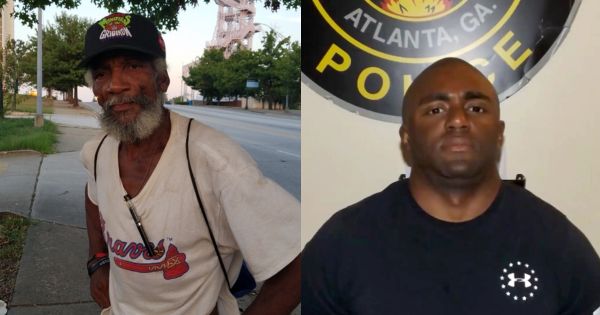
Nationwide — Jerry Blasingame, an African American man from Atlanta, Georgia, was left permanently paralyzed after a 2018 police taser incident during a foot chase. Since then, the officer who tased him, Officer Jon Grubbs, has been ordered to pay $21 million in damages.
According to Atlanta Black Star, the confrontation began when officers saw Blasingame, who was homeless at the time, allegedly panhandling in the area. When officers moved in, he ran, and Officer Grubbs chased him on foot through the area.
After roughly 45 seconds of pursuit, he fired his taser into Blasingame’s back without giving a warning. Blasingame fell down a steep embankment and hit a concrete structure near a utility box, suffering severe skull and spinal injuries that left him paralyzed from the neck down. At the time, he was 65 years old.
He spent years in medical care and remained quadriplegic. While still hospitalized, Officer Grubbs later went to his room and issued two misdemeanor citations related to roadway solicitation and obstruction. Internal review also noted that his body camera was not activated during the encounter, though he stayed on the force.
Blasingame’s guardian, Keith Edwards, filed a civil rights lawsuit in 2019. A federal jury later awarded $100 million in 2022, including $60 million against the city and $40 million against Grubbs. A judge later removed the city’s liability and reduced the officer’s share to $21 million.
The city of Atlanta was cleared under federal standards for municipal liability, leaving Grubbs personally responsible. His defense based on qualified immunity was rejected, with courts ruling that using a Taser on an unarmed man running down a steep slope violated clearly established constitutional rights.
The Eleventh Circuit upheld the $21 million judgment, agreeing that the force used was not legally justified under the circumstances. It also noted the terrain and risk below the embankment in its review of the case.
Grubbs is expected to pay about $700 a month toward the judgment, with collection handled through wages or liens. At that rate, full payment would take thousands of years. Blasingame died in September 2023, and his estate is now managed by a court-appointed guardian responsible for distributing any recovered funds.