


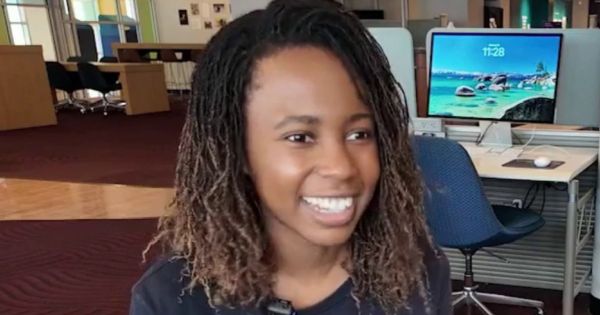
Nationwide — Malia Wakesho-Ajwang, a young African American student from Atlanta, Georgia, has created an AI-powered app after struggling to manage schoolwork following her ADHD diagnosis. Her platform helps students organize assignments, identify priorities, and break large tasks into smaller, more manageable steps.
As a computer science student at Emory University, she began developing the app after receiving her own ADHD diagnosis during her sophomore year, according to Fox 5 Atlanta. She found that existing productivity tools did not address the specific challenges she faced, which pushed her to create a tool that better matched her needs.
Her project, asoma.app, is designed to make large workloads easier to handle. It automatically pulls in assignments and narrows a student’s workload down to three priority tasks. It also uses artificial intelligence to break demanding assignments into smaller steps, giving students a clearer place to start when they feel overwhelmed by their workload.
The app combines ideas from several parts of her life. Her mother taught her strategies for handling learning challenges, while her psychology studies helped influence the way she approached the platform. She then used her computer science skills to turn those ideas into a tool for students who struggle with organization and getting started.
High school and college students are currently testing the app as it goes through its testing phase. For Wakesho-Ajwang, seeing students connect with the platform has been rewarding because she understands the frustration of having a lot to do but not knowing where to begin.
“I think the biggest thing is just seeing people understand that we understand,” Wakashio said. “It’s that finally someone gets it kind of moment. That’s always beautiful, because I know what it’s like to like, not know where to start, to be completely overwhelmed or like not understand why I want to do something and I can’t do something. So seeing it work is just like, like, yes.”
Asoma.app has both free and paid options. The premium version costs $25 per month, while students can also use the free version as the platform continues to be tested and developed.