


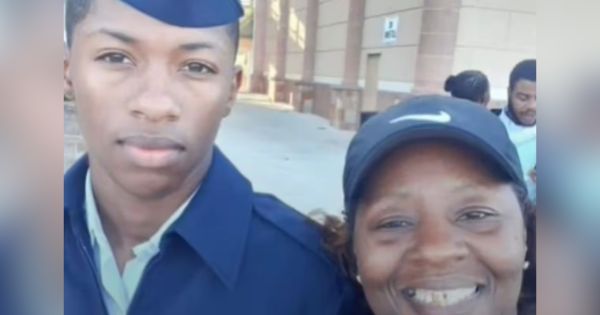
Nationwide — Meka Fortson, the mother of 23-year-old African American U.S. Airman Roger Fortson, who was shot and killed by a Florida sheriff’s deputy inside his apartment, says an all-white jury did not give her son’s case a fair chance. Six white men acquitted former Okaloosa County Sheriff’s Deputy Eddie Duran following a four-day trial over the May 2024 shooting. Fortson said she believes the jury’s racial makeup influenced the outcome.
The verdict left Fortson overwhelmed. She collapsed inside the courthouse after the jury found Duran not guilty and later said that she lost control of her body. She said she does not remember what happened immediately afterward and only recalls relatives helping her into a car outside the courthouse. Fortson was also troubled by how quickly the jurors reached their decision. While the judge spent nearly three weeks reviewing the evidence, the six jurors deliberated for about two hours. “Ain’t no way in hell they looked at all the evidence,” she said, according to Atlanta Black Star.
Duran had responded to a non-emergency domestic violence call at the apartment building when he encountered Fortson. Bodycam footage showed the deputy knocking several times before stepping to the side of the doorway. That position made it difficult for Fortson to see who was outside through the peephole. Fortson was alone in the apartment when he opened the door while holding his legally owned firearm pointed toward the ground. Duran then fired multiple shots within seconds, killing the young airman.
The composition of the jury became another source of concern for Fortson. The court initially selected eight white jurors, seven men and one woman. The woman and one of the men later became alternates, leaving six white men to decide Duran’s fate. Fortson remembered the white woman appearing shocked when she watched the bodycam footage. She believes the verdict might have been different if that juror had remained on the panel. Fortson said she had no major complaints about the judge or prosecutor, whom she believed followed the law and presented the case as strongly as they could.
Fortson also defended her son against criticism that he should not have answered the door while carrying a gun. She said Roger legally owned the firearm, kept it pointed toward the ground and did not have his finger on the trigger. She explained that he carried it because he considered the neighborhood where he lived dangerous. Fortson described Roger as intelligent, generous and deeply loved by his family. She said he had also worked to break generational struggles in his family. Research has also examined racial differences in how Black gun owners are perceived and found that diverse juries can spend more time discussing evidence and make fewer factual errors.
With Duran acquitted, Fortson said her family is now looking to a pending civil lawsuit as its remaining path toward accountability. She also connected her son’s death to broader concerns about how Black people can be viewed as threatening or aggressive. Still, she stressed that she does not believe every white person shares those views. “They didn’t kill Roger. Duran killed Roger,” she said. Fortson believes the six jurors’ decision showed how those perceptions can affect the way Black victims are viewed in cases involving police use of force.