


Talk on December 9th compares traditional soil carbon programs with on-farm biochar production, which lets a farm start generating carbon credits in its first year
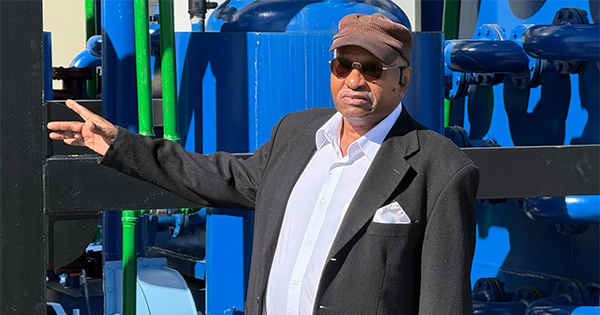
Nationwide — Michael Henry, Founder and CEO of Gridmaster Energy, Inc., will speak to members of the National Black Growers Council on December 9, 2026, about how farmers can earn carbon credits. The Council represents more than 400 Black farmers across the United States. His talk, part of the Council’s December 8–10 gathering in Raleigh, North Carolina, compares the two main ways farmers earn carbon credits today: changing how they work the soil, and turning farm waste into biochar.
The problem with the traditional path
Most farm carbon programs pay growers to adopt practices such as no-till or strip-till, cover crops, and better nitrogen management. These programs can pay, but the road is long. Farmers often commit their land for many years, wait for the soil to be sampled and the carbon verified, and receive payments spread out over the life of the contract. Programs also commonly hold back part of a farmer’s credits in case the carbon is lost later. The payout is also not guaranteed. Soil carbon can be lost if a farmer has to till a field after a flood, a drought, or a weed emergency. When that happens, credits can be reduced or taken back, even though the decision was out of the farmer’s hands.
A different way to earn carbon credits
Michael will walk farmers through a second path: turning crop residue, orchard waste, and other farm organic waste into biochar using a pyrolysis machine. Pyrolysis heats plant material without oxygen, locking its carbon into a stable, charcoal-like solid that can stay in the soil for centuries. Because the carbon is measured as the biochar is made, credits are not tied to the weather or to how a field is tilled years later. Michael will explain how a farm making its own biochar can begin earning carbon credits in its first year of production, once the credits are independently verified, instead of waiting years for soil results. The same machine also produces diesel fuel and electricity, giving a farm more than one return from waste it already has.
“Farmers have been told that carbon credits are a payday, but for many it’s a wait of several years with no promise at the end,” said Michael. “One bad season can wipe out years of work. I want farmers to know there’s another way: make the carbon credit from the waste you already grow, and start earning credits in your first year of production.”
The talk is educational and covers the pros and cons of both paths, so farmers can decide what fits their land. After the session, attendees can visit the Gridmaster Energy booth to speak with Devin Breithaupt, Gridmaster’s Chief Blockchain Officer and carbon credit lead, who will help farmers estimate what their own acres and farm waste could earn.
Event details
• What: “Carbon Credits for Farmers: Soil Carbon vs. Biochar,” presented by Michael Henry
• When: December 9, 2026, 2:30–3:30 p.m. ET
• Where: National Black Growers Council event, Hilton Hotel, 3415 Wake Forest Road, Raleigh, North Carolina
• Booth: Gridmaster Energy, December 8–10
About
Gridmaster Energy, Inc. is a Delaware corporation headquartered in Yulee, Florida. Through a network of franchisees, Gridmaster brings patent-protected pyrolysis systems, built in the United States by its manufacturing partner, to farms. The systems turn farm organic waste into diesel fuel, biochar, electricity, and carbon credits. Founder and CEO Michael Henry has more than 44 years of business leadership in financial services, insurance, energy deregulation, and clean energy franchising. Learn more at GridmasterEnergy.com
For press inquiries, contact Gridmaster Energy, Inc. at (470) 658-5990 or info@gridmasterenergy.com