


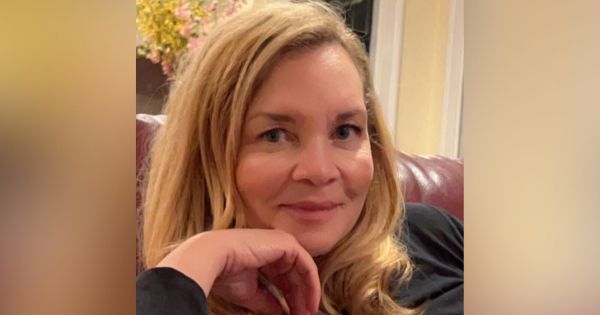
Nationwide — Miriam Zinter, an African American woman from New York who is often mistaken for white, says her daily life is shaped by how people react to her appearance. She explains how assumptions often change the way conversations unfold and what others feel comfortable saying.
That dynamic showed up one weekend while she was gardening. A longtime neighbor stopped by, and the visit turned tense after he questioned a Black Lives Matter sign in her yard, shifting a casual moment into a conversation about race.
When she told him she was Black, he struggled to believe it and began asking questions about her background. She explained that both of her parents are Black and that identity does not always match how someone looks.
Zinter told HuffPost that her family has mixed ancestry, which explains her light skin, blue eyes, and blond hair. Over generations, some relatives have appeared white, and that has shaped how they moved through the world.
She also points to family history that reflects those differences in perception. One relative passed as white decades ago, while another used that ability to buy property and help Black families access housing during times of discrimination.
Her parents also ran into barriers when trying to buy a home in New York in the 1960s. Despite steady jobs and savings, they were denied mortgages and had to find another way before eventually building a home in a mostly white neighborhood.
She says bias was also present in her early school years. A teacher once separated her from her classmates, and she later faced racist behavior from her peers. At home, her parents responded by focusing heavily on her education and preparing her for life in a mostly white environment.
As she got older, she noticed a pattern. When people believed she was white, they often spoke more openly about race, Black communities, and stereotypes, revealing views they might not have expressed otherwise.
She often responds directly in those moments, correcting assumptions about her identity and pushing back against stereotypes.
“Living as a Black woman who looks white has allowed her to experience white privilege firsthand. Because people assume I am white, it is assumed I am honest, smart, and trustworthy,” she said. “Many times I have thought to myself: If I looked Black, how would these people treat me? And I have known, without a shadow of a doubt, that I would be treated with disdain or suspicion, or as a criminal. I know in many instances that if I looked Black, the police would have been called to question me. And this sickens and angers me. How many of our Black brothers and sisters have had the police called on them simply for the act of living their lives?”
She says these experiences show how quickly assumptions can shape behavior and how easily bias can surface when people misread someone’s identity.