


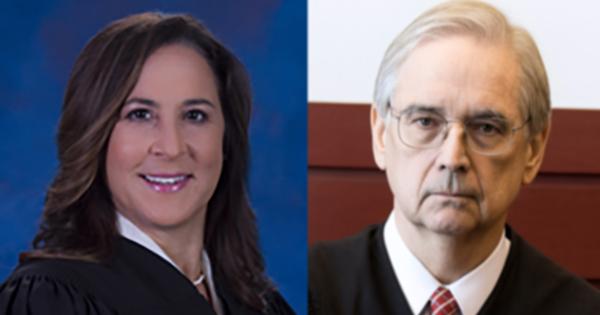
Nationwide — A firestorm of controversy is engulfing the legal landscape in Hillsborough County, Florida, as a federal appeal escalates the battle against a sweeping injunction issued by Circuit Judge Melissa Polo and United States District Judge Steven Merryday. The Washingtons, an African American family led by attorney Angela Washington DeBose, assert that an unprecedented injunction and subsequent procedural roadblocks have denied them access to justice.
They claim these actions facilitated a “hate crime” that led to the deletion of their sister Patricia Ann Washington’s wrongful death case from the court system. Now, the family is urgently pushing for Supreme Court supervisory review, demanding an investigation into what they deem a profound pattern of judicial and agency inaction.
An Unprecedented Lockout: Silencing a Licensed Attorney?
At the heart of this legal saga is a “broad, prophylactic” pre-filing or filing injunction issued by Judges Polo and Merryday, targeting Angela Washington DeBose, Personal Representative of the Estates of LaShawn and Patricia Ann Washington. This extraordinary mandate bars DeBose from representing herself in Hillsborough County, effectively imposing a total lockout or ban. Polo’s injunction in the Thirteenth Judicial Circuit Court restricts any paper filed by DeBose since 2022 unless submitted by a Florida Bar-admitted counsel, while Merryday similarly restricts DeBose from filing employment actions against the University of South Florida or their attorneys without mandated counsel.
The Washingtons argue that these sweeping mandates represent an “unprecedented restriction on access to courts for a licensed attorney,” demonstrably infringing upon DeBose’s fundamental right to self-representation and access to the courts. They contend this departs from the principle of narrowly tailored orders established in cases like Procup v. Strickland, viewing it as a targeted attack designed to silence their representative and jeopardize the estates’ legal pursuits.
Judicial Referral and a “Chilling Effect”
Further complicating the situation, Judge Merryday simultaneously referred DeBose to the Wisconsin Office of Lawyer Regulation (OLR), an action described by the family as an “extraordinary and potentially improper exercise of judicial power.” While the OLR ultimately found “no misconduct” by DeBose after a three-year inquiry, the Washington family asserts that this referral, combined with the attorney endorsement requirement, functions as an “impermissible prior restraint on access to the judiciary” and has created a “chilling effect” on DeBose’s professional standing and ability to access justice.
A “Procedural Quagmire” and the Deletion of a Wrongful Death Case
In a significant roadblock to the family’s pursuit of justice, the Eleventh Circuit Court of Appeals upheld an order from Judges Merryday and Polo, despite allegations of due process violations, which included the denial of prior notice and hearing requirements. The family contends that this decision effectively prevents Angela DeBose from pursuing her claims in Florida federal or county courts without mandated legal counsel, thereby denying a merits review of substantial legal issues. This ruling came after lawyers from Greenberg Traurig, P.A., requested the injunction. The Eleventh Circuit’s panel included Circuit Judge Robert J. Luck, who previously worked in the appellate section of Greenberg Traurig, P.A., and is also listed as a defendant in the underlying legal action and is the movant that requested the injunction.
The most devastating consequence, the family contends, is the deletion of Patricia Ann Washington’s wrongful death case (Hillsborough County Wrongful Death Case No. 25-CA-2858) from the court system by Victor Crist, the Circuit Court clerk, who cited the injunction as a defense. Michael Washington questions the injunction’s explanation for the clerk’s failure to perform basic ministerial duties, such as issuing a Clerk’s default, processing summons, or issuing subpoenas, while LaVonne Washington points to the selective deletion of presuit compliance evidence. The family vehemently asserts these actions amount to tampering with records and a misuse of public office, comparing it to a “hate crime” against their deceased sister and her estate.
Alleged Agency Inaction and a Call for Supreme Court Intervention
The Washington family expresses profound frustration with the alleged inaction of various state and federal agencies, including the Merrick Garland and Pam Bondi Justice Departments, Christopher Wray and Kash Patel’s FBI, and the Tampa Police Department, regarding their pleas for intervention concerning the injunctions and the subsequent deletion of Patricia Ann Washington’s wrongful death case.
The Washingtons are urging the Supreme Court to exercise its supervisory review, arguing that the consolidated effect of the injunction, procedural dismissals, and the federal court’s instigation of professional disciplinary proceedings has created an “insurmountable barrier” to their access to justice, raising a significant federal question demanding the Court’s resolution. The family hopes for an intervention that will rectify the perceived injustices and allow them to finally seek redress for their profound losses. However, the participants in this alleged cover-up are aware that the Roberts Court has not granted certiorari review in many individual rights cases.1 If this shrinkage continues, the unchecked discretion of lower courts and clerical staff, exacerbated by a reduced appetite for oversight from higher tribunals, will allow errors to persist without correction — leading further to a judicial meltdown in America.
This ongoing legal battle spotlights critical questions about judicial authority, the right to self-representation, and access to justice in the American legal system. The Washington family’s unwavering fight serves as a potent reminder of the potential for profound and devastating consequences when judicial orders are perceived as overreaching and fundamental rights are allegedly suppressed.