


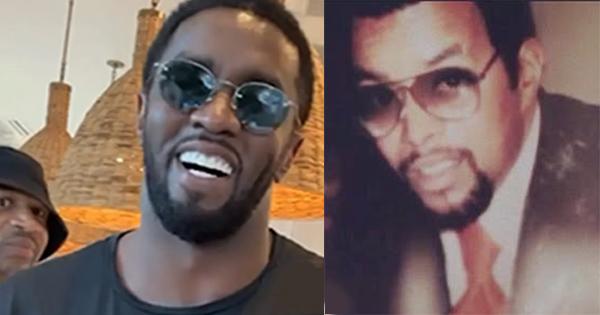
Nationwide — Everyone is talking about 50 Cent’s new documentary about Sean “Diddy” Combs on Netflix, and this has sparked new interest in an exclusive story published by Vibe years ago about who Diddy’s father was.
Well, his name was Melvin Combs, and he reportedly lived a dangerous double life that his young son would not understand until years later. Though Diddy would grow up to build a massive empire in music and business, his father’s world centered on the fast money, glamour, and extreme risks of Harlem’s late-1960s drug scene. In January 1972, Melvin was found shot to death in his parked car near Central Park West, a killing that shocked those who loved him and ignited decades of speculation about why he was targeted.
Melvin grew up in East Baltimore before moving to the Patterson Houses in the Bronx, where friends remembered him as athletic, stylish, and charming. His love for fine clothes and excitement pulled him gradually into the street life. By the late 1960s, he was befriending hustlers, frequenting Harlem nightlife, and becoming immersed in drug dealing. Despite his rising involvement in crime, he maintained a polished public image with his wife Janice while also carrying on relationships that came with the street lifestyle.
As his income and reputation grew, Melvin aligned himself with major figures in New York’s narcotics underworld, including Frank Lucas and, later, Willie Abraham’s heroin operation. Abraham’s crew was one of the largest rings on the East Coast, distributing massive quantities of heroin throughout New York and New Jersey. Melvin was not the top boss, but he played a meaningful role within the organization. His participation, however, put him squarely in the line of fire when the federal government began cracking down.
In late 1971, federal wiretaps led to the arrest of many of Abraham’s associates. Melvin was arrested soon afterward with drugs, a gun, and cash. Only two weeks later, he was executed at point-blank range inside his own vehicle. Rumors spread instantly: Did Melvin cooperate with authorities? Was he suspected of doing so? While friends like Frank Lucas insisted he would never betray his crew, the perception alone may have made him a target in a world where trust was fragile and silence was survival.
Years later, Melvin’s associate Claude Helton claimed to have learned who killed him. According to Helton, Willie Abraham’s lieutenant Walter Grant confessed that he deliberately set Melvin up, luring him to 106th Street, sitting beside him in the car, and shooting him twice in the head. Grant allegedly believed Melvin had talked—or would talk—to federal agents. Grant himself was eventually killed in Mount Vernon years later, closing the circle of violence that consumed so many from that era.
For Diddy, the truth of who his father was came slowly. Raised by his mother Janice away from Harlem’s dangers, he eventually sought answers about the man he barely remembered. As he rose in the music industry, he met friends and associates of Melvin who shared stories of his charisma, style, and troubled choices. Though Melvin’s life was brief and turbulent, his memory lived on through the son who would go on to achieve global fame—and who inherited not only his father’s smile, but also his relentless drive.