


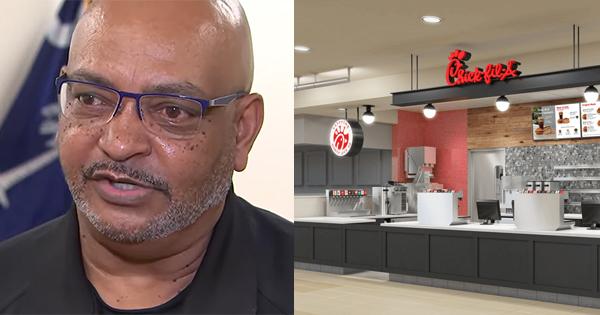
Nationwide — The owners of a Chick-fil-A in Augusta, Georgia, have apologized to the Clover Police Department after Sgt. Tracey Reid, an African American officer, reported experiencing racial discrimination while dining at the restaurant. He says he felt humiliated and embarrassed when he was the only one in his group who wasn’t offered a complimentary meal. “It seemed like it was a racial issue to me,” Reid said.
According to Yahoo News, Reid and three other Clover Police Department officers — three white and one Black — visited the Chick-fil-A for breakfast while on a work trip. “We came in together, same uniform, stood in line, there was never a time we were not together,” he said. The white officers were each given free meals, a gesture commonly extended to law enforcement. But when it was Reid’s turn, he was told he had to pay.
Detective Thomas Barnette, who witnessed the moment, said he was furious. “He said he had to pay for his meal, and it infuriated me,” Barnette said. “He looked at his plate—sad and humiliated—and that made me really mad.” Reid later wrote a letter to Chick-fil-A corporate urging the company to retrain its staff at the Augusta location and strengthen civil rights compliance policies chain-wide.
The Augusta store’s initial response offered two free meal cards, but both Reid and his colleagues rejected the explanation. “It said it was ‘perceived’ to be a racial incident,” Reid explained. “But it wasn’t perceived. It actually happened.” Barnette added, “We all saw it. It was a racial issue.”
In a statement to Channel 2 Action News, Chick-fil-A Augusta Owner-Operator Kenny Hanna said, “We regret the unintentional impact this incident had and sincerely apologize to our Guest. We were deeply concerned by this claim. It appears to have been an honest oversight across separate lines and registers. We are strongly committed to supporting our community’s first responders.”
The company says the employee involved was a team leader who does not normally work at the register, calling the incident a mistake. But for Sgt. Reid and his fellow officers, the impact of the experience remains deeply personal—and a reminder of why stronger accountability and training are needed.