


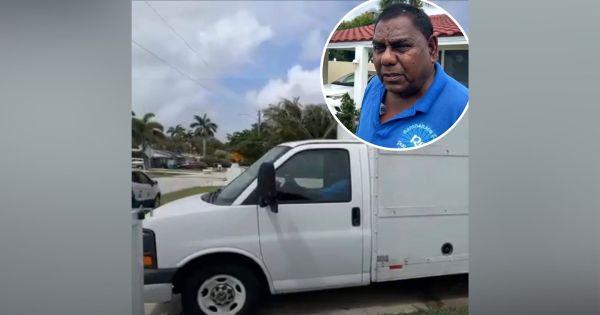
Nationwide — Bali Ramnarace, an African American handyman from Boynton Beach, Florida, who is handicapped, was fined $345 by the city for parking his work truck in the driveway of his home. He is also facing monthly penalties as he continues to challenge the city’s parking rules.
City officials also ordered him to remove his 10-foot commercial box truck from his property. He said the demand puts pressure on his job because he depends on the vehicle for transporting tools and materials.
He says the truck is essential to his livelihood and daily routine. “I think they should have some consideration, because I’m handicapped and this is very convenient when this is here at my house,” Ramnarace told the New York Post. “That’s how I make a living, without that I can’t do anything.”
City officials pointed to the municipal code that limits parking of larger vehicles in residential areas. The rule is aimed at protecting neighborhood conditions and restricting long-term parking of trucks, tractors, buses, and similar heavy vehicles in certain zones.
Ramnarace disputed the violation, saying his truck meets most requirements, including weight and axle limits. He said it is a single-axle 10-foot box truck weighing under 16,000 pounds, and believes it should be allowed under the rules.
He also said he has parked the vehicle at his home for about 45 years and asked to be exempt or “grandfathered” in due to long-term use. He added that he was not given a clear alternative location to park the vehicle.
In addition to the $345 fine, he faces a recurring $75 monthly penalty if the violation continues. He said he still does not know where he can legally park the truck if he is forced to move it.
Boynton Beach updated its parking ordinance in February, tightening restrictions on vehicle storage in residential zones. The rules limit parking in yards, swales, and streets, allowing driveways only for short-term or approved use.
Some residents have criticized the changes, saying they reduce parking options for homeowners outside homeowner associations. City officials said the ordinance is intended to improve public safety and preserve neighborhood standards, not generate revenue.