


Earth, I Thank You: The Garden and Legacy of Anne Spencer Now Streaming
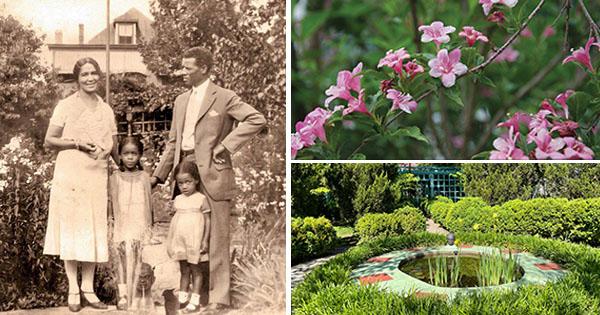
Nationwide — The Garden Conservancy’s new documentary film Earth, I Thank You: The Garden and Legacy of Anne Spencer is now streaming on the Garden Conservancy’s website and YouTube channel.
Earth, I Thank You: The Garden and Legacy of Anne Spencer explores the historic sanctuary of Harlem Renaissance poet, civil rights advocate, and gardener Anne Spencer. The 37-minute documentary celebrates the cultural and historical significance of the Anne Spencer House and Garden Museum in Lynchburg, VA. It is rare for a historic house and garden to survive intact—especially one belonging to an African American. This historic site offers a glimpse into the life of one of the most influential figures of the Harlem Renaissance.
Spencer’s beloved garden was an oasis where she wrote much of her poetry, drawing inspiration and insights from the natural beauty surrounding her. It was also a vibrant gathering place, welcoming luminaries and civil rights leaders, including Langston Hughes, James Weldon Johnson, Zora Neale Hurston, Thurgood Marshall, George Washington Carver, and Dr. Martin Luther King Jr.
Earth, I Thank You traces the evolution of the property from a personal retreat to a nationally significant cultural landscape. The home and garden are listed on the National Register of Historic Places and the Virginia Landmarks Register, ensuring their preservation for future generations. By documenting the beauty and significance of Spencer’s garden, Earth, I Thank You honors the profound connection between gardens, history, and community. View the trailer at gardenconservancy.org/films
Garden Conservancy board member Kate Cordsen is Executive Producer of the documentary. The documentary is made possible by the Suzanne and Frederic Rheinstein Fund for Documentary Films, a groundbreaking Garden Conservancy initiative envisioned by the late Suzanne Rheinstein to use film to capture the essence of gardens and their historical significance.
Gardens, as living works of art, present unique storytelling opportunities, and the documentary film program takes an innovative approach using a blend of archival materials, interviews, letters, and visual storytelling. Earth, I Thank You offers a multi-dimensional portrait of Spencer’s garden and the role it played in her creative life at a pivotal time in American history. The film also explores the literary legacy of Anne Spencer as a poet, librarian, and civil rights advocate who opened the Lynchburg, VA, chapter of the NAACP and became a nationally recognized figure.
The legacy of Anne Spencer’s garden
Spencer’s garden is one of the most significant examples of a preserved African American garden in the United States. A modest and deeply personal space, the garden is imbued with stories of civil rights advocacy, literary genius, the joy of family, and the many historic figures who walked its paths. It was here that Anne Spencer created her poetry and where she and her husband Edward Spencer spent time with their family and connected with some of the most important intellectuals and activists of their time. The garden features a sculpture given to Spencer by W. E. B. Du Bois.
At the heart of the garden stands “Edankraal,” a writing studio that Spencer’s husband built for her. The cottage, whose name combines the couple’s names (Edward and Anne) with “kraal,” the Afrikaans word for enclosure, symbolizes the intertwined lives and creative synergy of the Spencer family. This small but meaningful working space is featured in the documentary as a key element of the garden’s design and a reflection of Spencer’s creative process.
The garden’s design blends original plants and sculptures with found objects that reflect both Anne and Edward Spencer’s artistry and creative spirit. In the 1980s, the garden underwent a thoughtful restoration, initiated by Anne Spencer’s son, Chauncey Spencer, led by the Hillside Garden Club, which worked to preserve its unique character and connection to Spencer’s literary legacy. The Garden Conservancy advised on a second restoration of key garden elements in the mid-2000s and continues to provide preservation planning support today.
Appearing in the film are key figures in the world of historic preservation and African American history. Brent Leggs, of the National Trust for Historic Preservation, offers insights into the significance of preserving this site. Peggy Cornett, Curator of Plants at Thomas Jefferson’s Monticello; Dr. Reuben M. Rainey, Professor Emeritus at the University of Virginia and co-author of a book on Anne Spencer; and Dr. Noelle Morrissette, Director of African American and African Diaspora Studies at the University of North Carolina Greensboro and author of a book on Anne Spencer, discuss the horticultural heritage and legacy of the garden and its role in shaping African American cultural identity.
“She writes that this garden was half her world, and it really was half her world,” Shaun Spencer-Hester observes during the film, speaking from her grandmother’s garden in Lynchburg. “She couldn’t vote. She was a black woman who was very vocal here in this city. It was a place that she used to come to write, and to garden, but also to escape—to get away from the things that were going on outside of this garden gate.”
Earth, I Thank You is the newest in a collection of documentary films produced by the Garden Conservancy. A Garden in Conversation: Louise Agee Wrinkle’s Southern Woodland Sanctuary premiered in 2024, exploring how Louise Wrinkle cultivated and transformed her childhood home in Mountain Brook, AL, into a regional treasure inspiring an appreciation for native gardening and conservation. The collection also documents Blithewood Garden in Annandale-on-Hudson, NY, the John P. Humes Japanese Stroll Garden in Mill Neck, NY, and the woodland garden at Rocky Hills in Mount Kisco, NY.
“Through documentary film, we can preserve the ephemeral nature of a garden, and capture the sensory experience of visiting these living works of art. We can also capture the remarkable voices of the garden’s creators and stewards,” said James Brayton Hall, President and CEO of the Garden Conservancy. “Anne Spencer’s garden is extraordinarily important in helping us share a broad and diverse range of American gardening stories. We hope this film inspires further understanding of Spencer’s exceptional legacy, and the value of preserving such a significant space.”
About
The Garden Conservancy is a non-profit organization that preserves, shares, and celebrates America’s gardens and diverse gardening traditions. Based in Garrison, New York, it works nationally to protect gardens of horticultural, historical, and design significance. Since its founding in 1989, it has helped ensure the survival of more than 100 public gardens. The Garden Conservancy’s signature program, Open Days, is the largest private garden visiting initiative in the U.S., and since 1995, more than 4,000 gardens have participated, with 1.4 million visitors in 41 states. The Garden Conservancy has produced numerous documentary films and film shorts, highlighting gardens as cultural landscapes and living works of art. Lectures, tours, symposia, and webinars offer engaged exploration of environmental, cultural, and historical issues. Through all of its programs and outreach, the Conservancy champions the vital role that gardens play in our history, our culture, and our quality of life. For more information, please visit GardenConservancy.org
Photo Credits:
• Anne Spencer Pond, courtesy of The Garden Conservancy
• Anne and Edward and grandchildren, late 1920s. Courtesy of Anne Spencer House and Garden Museum, Inc.
• Anne Spencer Garden, Blossoms. Film still courtesy of The Garden Conservancy