


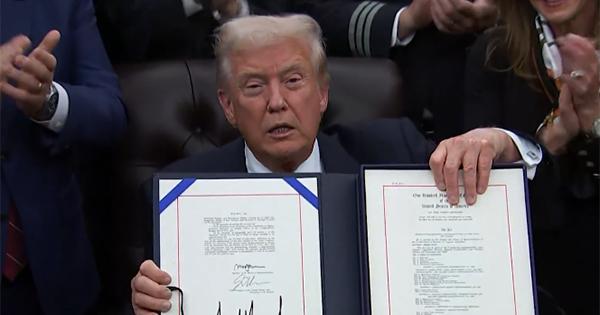
Nationwide — The longest government shutdown in U.S. history has officially come to an end, marking a major turning point after weeks of political tension and nationwide disruption. Late Wednesday night, President Donald Trump signed a funding bill that immediately reopens the federal government, restoring operations that had been stalled and allowing federal employees to return to work. The action followed a closely watched vote in the House, providing a long-awaited resolution to a painful chapter for millions of Americans.
According to ABC News, earlier in the evening, the House approved the measure in a 222–209 vote, sending the bill to the president’s desk for final signature. The Senate had already passed the legislation on Monday. The new funding package keeps the government open through Jan. 30 and guarantees full-year funding for several federal agencies, giving lawmakers breathing room to tackle ongoing disputes without further shutdown fallout.
When signing the bill, Trump was surrounded by Republican lawmakers and members of his Cabinet, using the moment to emphasize his frustration with Democrats. He accused them of allowing Americans to “suffer” in an effort to satisfy their most liberal supporters. Regardless of political rhetoric, the signature marked the moment the shutdown formally concluded, allowing federal services, programs, and paychecks to resume after an unprecedented disruption.
Even as the government reopens, political disagreements continue to simmer. House Speaker Mike Johnson publicly expressed anger toward a Senate provision that would allow senators to sue the government if their phone records were accessed without notice. Johnson said he confronted Senate Majority Leader John Thune over what he called an inappropriate addition to the funding package. He plans to move forward with a separate House vote next week to repeal the controversial measure.
Democratic leadership also weighed in after the shutdown ended, promising to continue pushing for expanded Affordable Care Act tax credits—one of the central issues behind the funding standoff. Leaders Hakeem Jeffries, Katherine Clark, and Pete Aguilar argued that Republicans must work with Democrats to address what they call a growing healthcare crisis. They urged moderate Republicans to support a discharge petition that would force a vote to extend ACA tax credits for three years.
Although political debate will certainly continue, the most significant development is that the government has reopened and federal workers—many of whom faced financial strain during the historic shutdown—can finally return to normalcy. The House passage of the bill, with a handful of Democrats joining Republicans, paved the way for the shutdown’s conclusion. For now, Americans can breathe a sigh of relief knowing the stalemate has ended and essential services are back up and running.